Private Label High-Speed Hair Dryers: Quality and Custom Options
Compare high-speed hair dryer construction, far-infrared, negative-ion, oil atomization and AI sensing options for private-label brands and distributors.




Sourcing a High-Speed Hair Dryer? Look Beyond the Housing
Have you ever sourced a high-speed hair dryer that looked right in the quotation, felt acceptable in the first demonstration, and then became an after-sales headache?
For a brand or distributor, that is an expensive way to discover what was missing from the comparison. The replacement unit costs money. So does the shipping. Your team spends time handling complaints, while the customer remembers the name printed on the dryer: yours.
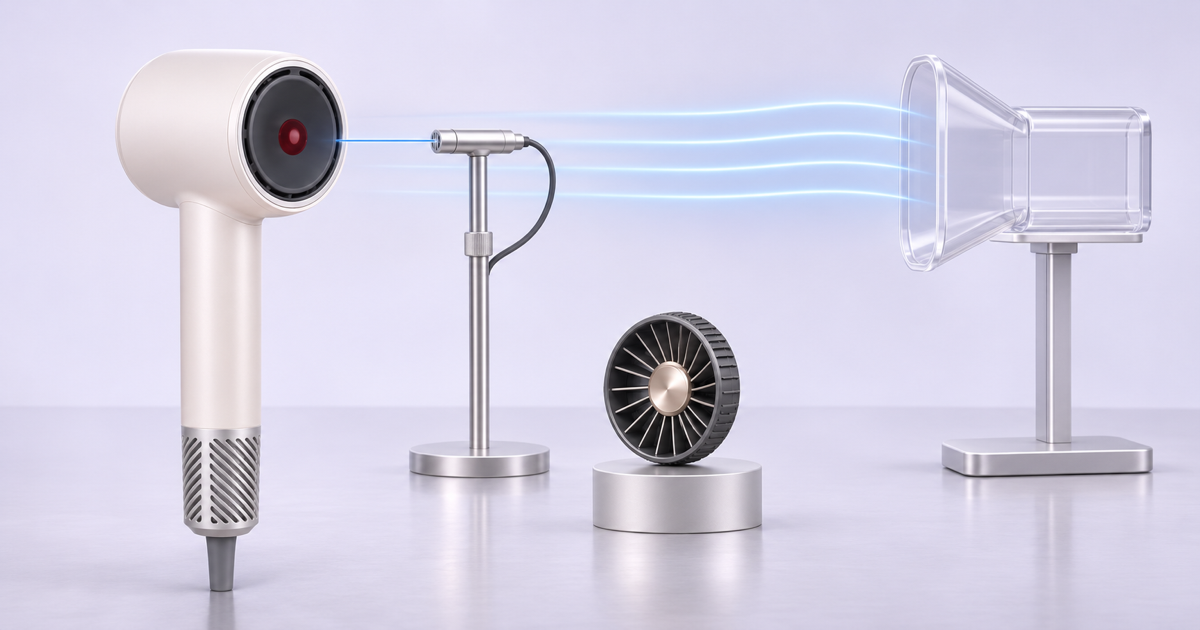
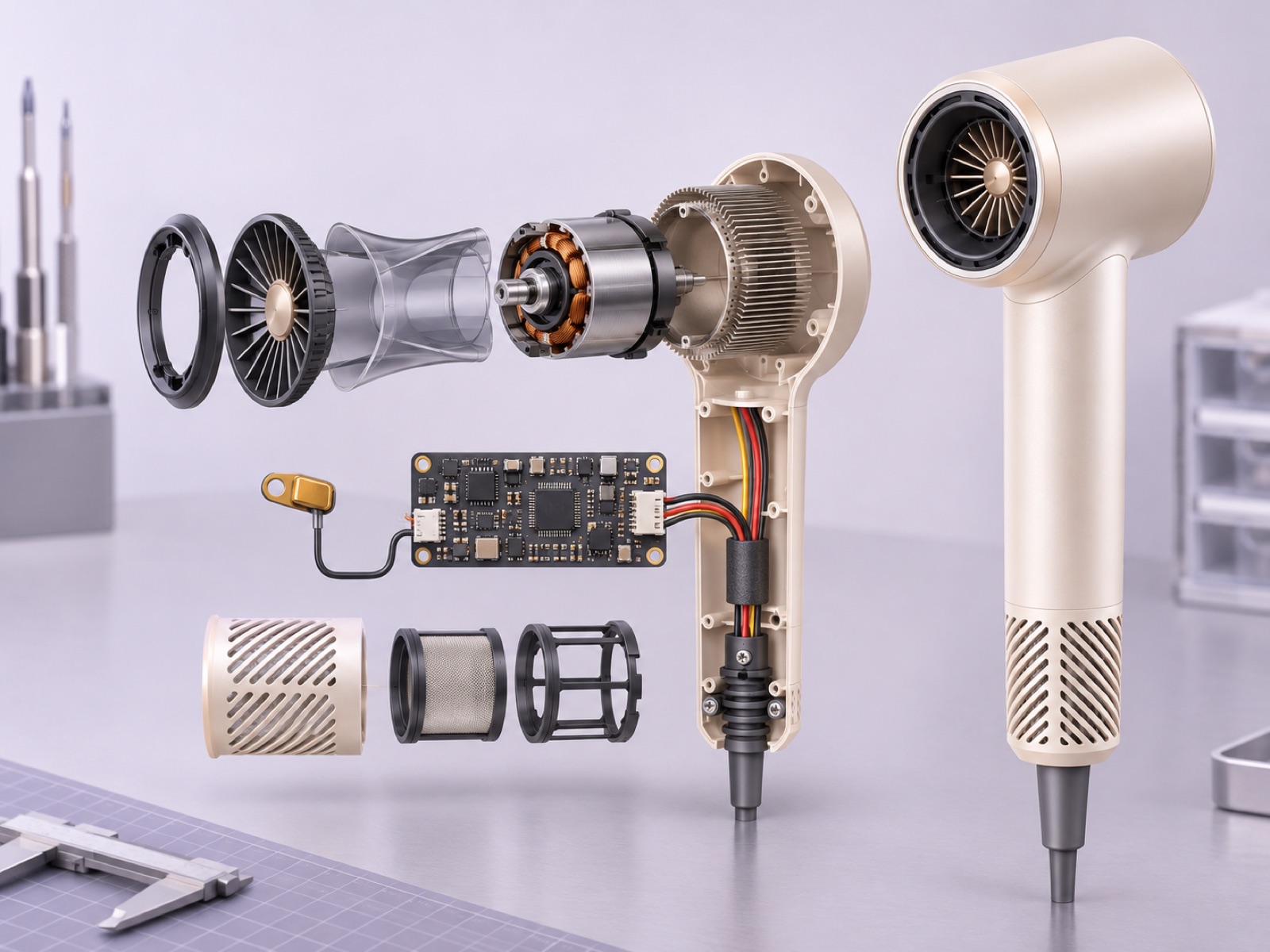
Two products can share almost the same housing and still be very different high-speed hair dryers. Inside, the motor mounting, airflow path, circuit protection, plastic materials, cable construction and thermal management may have little in common. Even the finish, button feel and fit between housing parts can vary considerably.
Some weaknesses are built into the design. Poor heat management or an overstressed internal connection may not show up during a short sample demonstration. They can become a problem after a few months of everyday use, sometimes sooner. If you are choosing a high-speed hair dryer manufacturer for your next product line, the useful question is simple: what exactly are you getting behind that familiar housing?
What B2B Buyers Should Check Behind the Housing
A good-looking product helps win the first sale. Daily use decides whether customers recommend it.
Does the airflow feel consistent? Is the heat comfortable to control? Does the cable feel appropriate for the product’s price? Do the buttons still feel solid after repeated use? Does the finish match the premium packaging your brand has invested in?
These details are easy to overlook when quotations are built around motor speed, wattage and a product photo. For distributors, they affect returns and retailer confidence. For brands, they affect reviews, repeat purchases and the price customers are willing to pay.
This is why a high-quality high-speed hair dryer should be evaluated as a complete product: internal construction, thermal control, handling, materials, wiring and the features your customers will actually use.
Meet LecSnow’s High-Speed Hair Dryer Platform
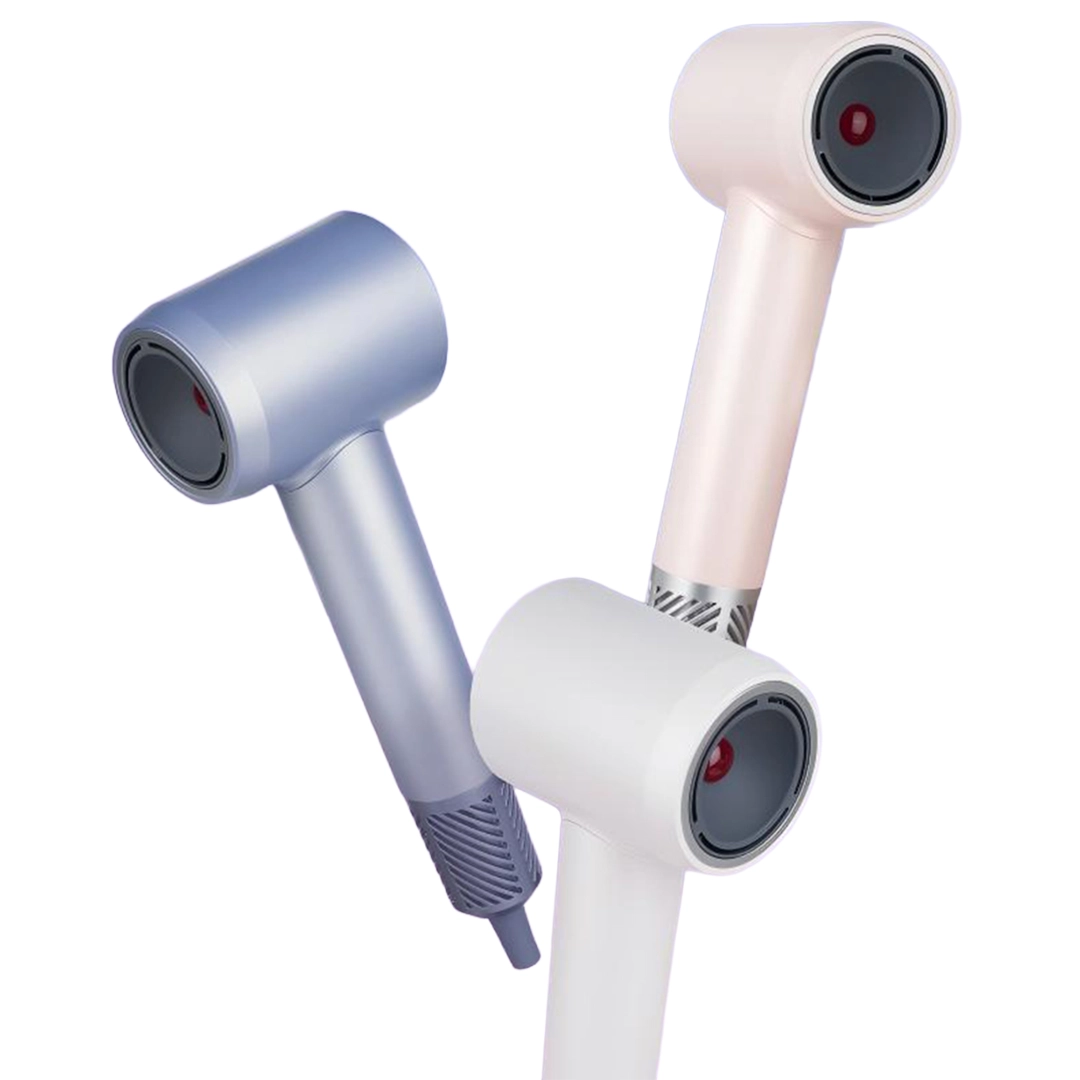
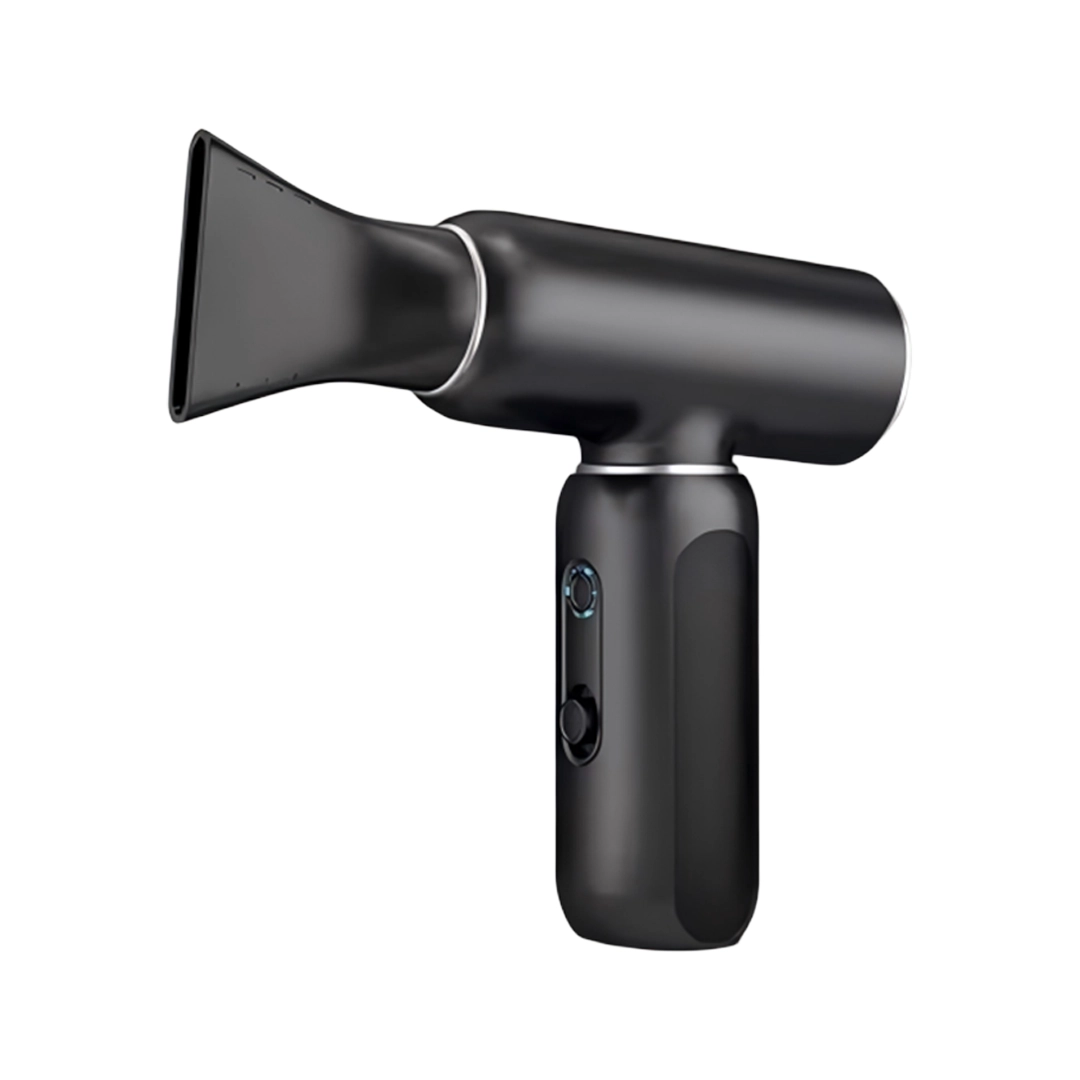
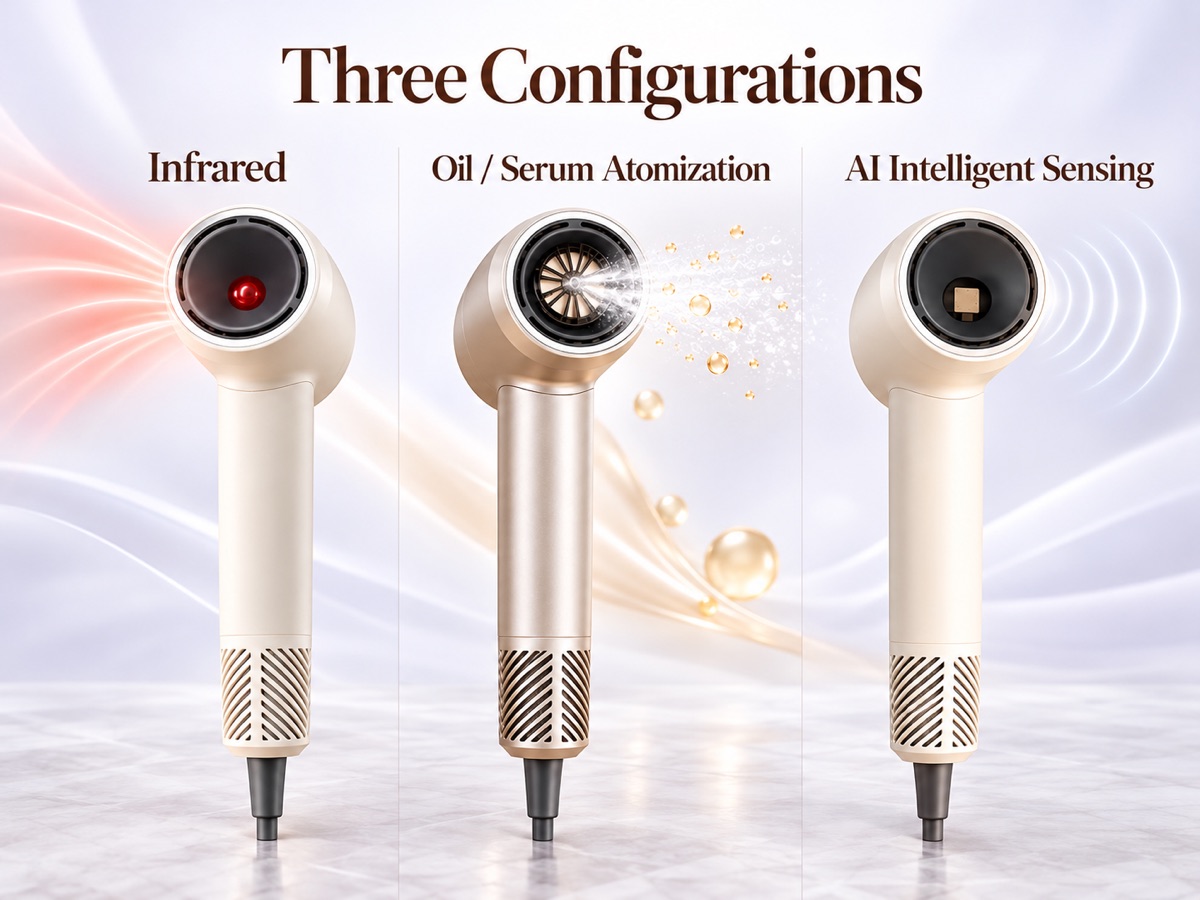
The LS-HD01 high-speed hair dryer platform gives brands a shared product foundation with three different directions: far-infrared and negative-ion hair care, a built-in oil or serum atomization system, and AI intelligent sensing. You can choose one version for a focused launch or build a coordinated range for different customers and price points.
Explore the high-speed hair dryer product platform for the base product and current configuration direction.
Core Specifications
| Item | Platform direction |
|---|---|
| Model platform | LS-HD01 high-speed hair dryer |
| Motor and airflow | High-speed motor up to 109,000 RPM; airflow up to 21 m/s in the high-speed configuration |
| Negative-ion option | Up to 200 million negative ions/cm² on the referenced configuration |
| Temperature control | NTC temperature monitoring and control; final settings depend on the product brief |
| Power and voltage | Configurations around 1200W or higher can be discussed by market; 110V/60Hz and 220V/50Hz options are available for evaluation |
| Functional versions | Far infrared and negative ion; oil or serum atomization; AI intelligent sensing |
Specifications are a starting point for sample evaluation, not a substitute for a market-specific product brief. Final power, plug, control logic and configuration should be confirmed for the destination market and intended use.
What Makes This Platform Different?
| What buyers often compare | What we focus on at LecSnow | Why it matters for your brand |
|---|---|---|
| Similar housing and product photos | Internal component selection, thermal management and cable construction | Gives you more to compare than appearance and unit price |
| A high motor-speed figure | High-speed airflow paired with NTC temperature control | Connects the headline specification to the drying experience |
| A logo and a new colour | Three distinct functional versions | Creates a clearer reason for customers to choose your product |
| A one-time appliance purchase | An optional sealed or refillable oil atomization system | Adds a potential care routine or replenishment story to your range |
| One standard configuration for every buyer | Power, branding, packaging and functional customization | Helps match the product to your market and sales channel |
For a private-label hair dryer project, these decisions should be made before packaging is finalized. They shape both the product and the story your sales team can tell.
Three Versions for Three Product Strategies
1. Far-Infrared and Negative-Ion High-Speed Hair Dryer
This version combines high-speed drying, negative-ion technology and a far-infrared configuration for brands building a hair-care-led appliance range.
The appeal is straightforward: customers still want a dryer that is easy to use, but your product gives them more to consider than airflow alone. For a beauty brand expanding into appliances, a far-infrared high-speed hair dryer offers a clear product direction without introducing a separate refill routine. For a distributor, it gives the sales team a distinct feature to demonstrate rather than another colour variation of the same dryer.
It is a practical starting point for a premium negative-ion high-speed hair dryer range with familiar controls and a stronger hair-care identity.
2. Custom Built-In Essential Oil Chamber High-Speed Hair Dryer
If your brand already sells hair-care products, a custom built-in essential oil chamber high-speed hair dryer opens a different conversation. The appliance and the hair-care routine become one product experience.
The oil atomization system uses a thin perforated metal mesh heating element in direct contact with a cotton or porous ceramic liquid-delivery substrate. The element heats the oil or serum at the contact surface, producing a fine mist into the airflow.
This heated-mesh architecture is designed for rapid, even heating and consistent mist output. Performance depends on the formula, liquid-delivery material, mesh design and power control, so the complete system should be evaluated during sample development.
Unlike ultrasonic atomization, this system relies on controlled heating rather than ultrasonic vibration.
There are two cartridge directions to consider:
Sealed, replaceable cartridges: The customer replaces the cartridge when it is empty. This gives brands a simple refill format and an opportunity to sell replacement cartridges alongside the dryer.
Refillable reservoirs: A refillable design gives brands another route for compatible hair-care formulas. It can suit a range where customers already buy a bottled product and want to use it within the drying routine.
The formula and atomization system need to work together. Tell us which oil or serum you want to use when discussing this version, and we can evaluate whether a sealed, replaceable or refillable direction is more suitable. The refillable oil chamber remains a development option to be validated with the selected formula.
3. AI-Sensing Distance and Temperature High-Speed Hair Dryer
The AI-sensing distance-temperature high-speed hair dryer version is designed for brands that want the interaction itself to stand out.
Its sensing system can be configured to respond to the distance between the dryer and the user, with automatic adjustment of temperature and airflow. That gives the product a useful demonstration: move the dryer closer or farther away and show how the response fits the drying routine.
For an AI smart hair dryer project, this is a more engaging sales story than a long list of settings. It also gives product managers a different direction from the infrared and oil-atomization versions: a smart hair dryer built around sensing, ease of use and a visible user interaction.
See the Three Versions in Action
Use the video to compare the product direction, controls and sensing response before choosing the version for your sample evaluation.
Custom High-Speed Hair Dryers for Your Market
A product that fits one market may need a different configuration for another. Power requirements, supply voltage, plugs, retail positioning and user preferences should all be considered at the start of an OEM hair dryer project.
For home-use markets such as Japan, India and selected African markets, buyers may request a conventional configuration around 1200W. We can develop samples and production configurations around that brief when the destination country, voltage, plug and intended use are clearly defined. A regional label alone is not enough for a reliable specification.
Power customization is one part of the project. We can also discuss:
- Brand colours, surface finish and logo application.
- Packaging, manuals and accessory combinations.
- Far-infrared, negative-ion, oil-atomization or AI-sensing configurations.
- Sealed cartridge or refillable reservoir concepts.
- Operating modes and additional user-interaction features.
For projects with sufficient order volume, custom functions can go further. For example, a brand may want the dryer to pause when it is put down and restart when it is picked up. We can review that operating logic as part of an ODM high-speed hair dryer development project, alongside the sensor arrangement and intended use.
Start with the experience you want your customer to have. We can then work through the sample, configuration and production requirements.
Build a Hair Dryer Range Your Brand Can Stand Behind
Your next hair dryer needs to do more than look good beside competing products. It should feel right in the customer’s hand, offer a clear reason to buy, and fit the market you plan to serve.
Whether that means a far-infrared ionic dryer, a private-label oil-infusion hair dryer or an AI-sensing model, the choice should support your brand’s positioning. Tell LecSnow your target market, preferred version, power requirements and expected order quantity. We can help you select a sample and develop the customization brief for your range.